How to Budget Biweekly Income? Learn in Easy 5 Steps
Trying to budget biweekly income often feels harder than it should. Bills don’t always match up with payday, so rent or insurance might come due before money hits the account. Groceries and gas eat up more than expected, and by the second week many people feel stretched thin. Then there are those “extra” two paychecks each year — they sound exciting, but without a plan they disappear fast.
These are common struggles, and they leave many families feeling stuck in a cycle of waiting for the next payday. The good news is, with the right system, biweekly pay checks can actually make budgeting easier, giving you more chances to plan, save, and stay in control.
RELATED READS:
Half payment budget method
Zero-based budgeting explained
Budgeting with irregular income
What Does It Mean to Budget Biweekly Income?
Budgeting with biweekly income means planning your money when paychecks come every two weeks, not once a month. On this schedule, you’ll typically receive 26 paychecks per year instead of 24 (like semi-monthly pay). That means twice a year, you’ll have an “extra” paycheck — but only if your budget is structured to take advantage of it.
The key to managing biweekly pay is timing. Because bills like rent, utilities, and insurance are due monthly, they won’t always match up neatly with your paydays. To make it work, you’ll need to align income and expenses on a calendar, decide how much from each paycheck covers fixed costs, and know in advance where extra checks will go.
Here are the biggest mistakes people make with biweekly budgets:
- Forgetting the difference between biweekly and semi-monthly pay. Many assume both mean the same thing, but the difference in pay frequency completely changes how budgets work.
- Not planning for “extra” paychecks. Those two bonus checks each year are powerful tools for savings or debt repayment, but too often they get spent quickly.
- Treating each paycheck like it stands alone. Without a system, one check might go entirely to bills and leave nothing for daily needs, while the next gets wasted on wants.
- Ignoring irregular expenses. Annual insurance premiums, school costs, or holiday shopping can derail a budget if you’re only focused on two-week cycles.
When done correctly, budgeting biweekly income gives more opportunities to adjust, save, and stay in control. The rest of this guide will show how to build a system step by step so every paycheck works toward financial goals.
Step 1: List All Expenses and Track Paydays
The foundation of a successful budget biweekly income plan is knowing exactly where money is going and when bills are due. Most people think they already know their expenses, but when everything is written down, surprises almost always appear.
Create a Full Expense List
Start by writing down every single expense — both fixed (the same each month, like rent or car payments) and variable (changing month to month, like groceries or utilities). Don’t forget annual or quarterly bills, such as insurance premiums, school fees, or holiday spending. Many budgets fail because these “irregular” costs aren’t included until it’s too late.
💡 Best practice: Treat savings goals like fixed expenses. Instead of waiting to see what’s “left over,” put aside a set amount from each paycheck for an emergency fund, retirement, or other goals. This prevents savings from being skipped during tight weeks.
Track Your Paydays
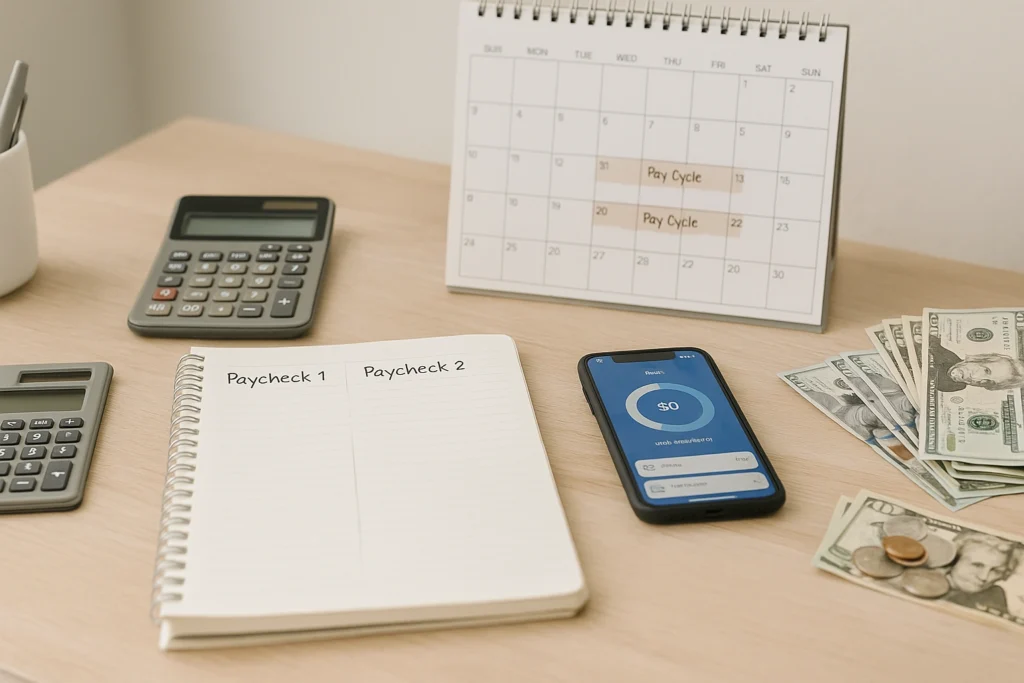
Next, mark out all 26 paydays on a calendar (digital or paper). Under each payday, write which bills will fall within that two-week cycle. This visual map makes it clear whether one paycheck will be overloaded with bills while the other feels lighter.
For example:
- Paycheck on March 1 → covers rent due March 3, utilities due March 8.
- Paycheck on March 15 → covers groceries, insurance, and transportation.
By tracking this, you’ll immediately see where the gaps are and which pay checks need adjustments.
Mistakes to Avoid
- Guessing instead of writing things down. Small subscriptions, memberships, or irregular fees are often forgotten until they eat into the budget.
- Only focusing on monthly bills. Biweekly budgeting requires thinking about all costs, not just the obvious ones.
- Not including savings. If savings aren’t listed as an expense, they usually don’t happen.
👉 Once your expenses and paydays are mapped out, you’ll have the foundation to start dividing income more effectively — which is the next step.
Step 2: Split Large Bills Across Paychecks
One of the biggest challenges when trying to budget biweekly income is handling large monthly bills, like rent, mortgage, or insurance. These payments don’t always line up neatly with payday, which can leave one paycheck feeling overloaded while the other seems too light. The solution is to break big bills into smaller chunks across both paychecks.
How It Works?
Instead of waiting until rent is due and paying the entire $1,200 out of one paycheck, set aside $600 from each of your two paychecks that month. Keep it in a separate “bills account” or envelope until the payment date. This spreads the cost evenly and prevents one payday from being drained completely.
This method works for any major bill — rent, mortgage, car loan, insurance premiums, or even student loan payments. It’s a way to smooth out cash flow so no single paycheck feels impossible to manage.
Why It Helps?
- Removes stress: Knowing money for big bills is already set aside keeps you from scrambling.
- Prevents overdrafts: Splitting bills avoids wiping out an account and falling short on groceries or gas.
- Encourages discipline: It builds the habit of saving for obligations before spending on wants.
Mistakes to Avoid
- Waiting until the due date. This often leads to using an entire paycheck at once and leaves nothing for daily expenses.
- Mixing bill money with spending money. When rent money sits in the same account as dining-out money, it’s easy to spend it without realizing.
- Not planning for timing differences. If rent is due on the 1st but payday isn’t until the 3rd, you need to save from the previous paycheck to cover it.
💡 Best practice: Open a free checking or savings account just for bill money. Each payday, transfer the set amount immediately. When the due date comes, the money is waiting — no stress, no scrambling.
Step 3: Plan for Variable Spending “Groceries, Gas, Daily Needs“
Once the big fixed bills are handled, the next challenge is managing the everyday expenses that don’t stay the same each cycle. Groceries, fuel, household items, and even small “treats” are easy to underestimate, and if they aren’t controlled, they can wipe out your paycheck faster than any rent payment.
How to Budget for Variable Expenses?
Start by looking at the average spent over the last three months. If groceries cost about $500 monthly, that means each paycheck should allocate $250. Do the same for gas, personal care, and other weekly costs. By dividing these amounts per paycheck, you ensure daily living expenses are covered without dipping into bill money.
💡 Pro tip: Use the envelope system (physical or digital apps) for categories like food, gas, and entertainment. Each envelope gets its set amount from that paycheck. Once it’s gone, it’s gone — this keeps overspending in check.
Why This Step Matters?
- Predictable spending: Even though the costs change slightly, you’ll always have a target to stick to.
- Avoids “empty wallet” syndrome: Instead of spending freely in week one and struggling in week two, your money stretches evenly.
- Builds awareness: Tracking variable spending helps you spot where leaks happen, like too many takeout meals or unnecessary store runs.
Mistakes to Avoid
- Budgeting unrealistically. Cutting grocery money too tight often backfires, leading to credit card use or dipping into savings.
- Not adjusting seasonally. Gas, utilities, and food costs can rise in certain months; ignoring this leads to shortfalls.
- Forgetting small costs. Things like school supplies, birthday gifts, or household fixes often sneak in and throw the budget off.
💡 Best practice: Add a small “buffer fund” into your variable expenses — even $20–$50 per paycheck. This covers those small surprises without breaking the budget.
Step 4: Decide What to Do with Extra Paychecks
One unique advantage of a biweekly schedule is that you’ll receive 26 paychecks each year. Since most budgets are built around 12 months, that leaves two “extra” paychecks — usually one in the spring and one in the fall. How you handle them can either push you forward or hold you back.
How to Use Extra Paychecks Wisely?
The best approach is to decide in advance what those paychecks will do. Without a plan, most people treat them as bonus money and spend them quickly on wants. With a plan, those two checks can transform your finances.
Some smart ways to use them include:
- Building an emergency fund if savings are still low. This creates a safety net for medical bills, car repairs, or job changes.
- Paying down high-interest debt, like credit cards, which frees up money in future months.
- Boosting retirement accounts (401k, IRA) or sinking funds for long-term goals.
- Covering irregular expenses, such as annual insurance premiums, holiday shopping, or school costs, without dipping into regular paychecks.
Why This Step Matters?
- Reduces financial stress: Having a plan prevents “bonus check guilt” after impulsive spending.
- Builds momentum: Extra paychecks are rare opportunities to jump ahead on goals.
- Prepares for life events: Using them for savings or debt repayment makes the rest of the year easier.
Mistakes to Avoid
- Spending without intention. A common regret is looking back and not knowing where the entire check went.
- Relying on extra paychecks for bills. They should be treated as opportunities, not lifelines. If you need them for essentials, the budget needs adjusting.
- Not coordinating with family. If one partner assumes it’s for savings but the other spends it, stress and conflict follow.
💡 Best practice: Assign each extra paycheck a purpose at the beginning of the year. Write it down in your budget calendar so when the day comes, there’s no debate — only action.
Step 5: Track, Adjust, and Improve Every Cycle
Even the best biweekly budget won’t be perfect from the start. Expenses shift, paychecks vary slightly, and life throws surprises. The key is not to expect perfection but to review and improve with each cycle. Tracking helps you stay in control and avoid slipping back into the paycheck-to-paycheck stress.
How to Track a Biweekly Budget?
At the end of each two-week period, compare what you planned to spend with what you actually spent. Write it down in a notebook, use a spreadsheet, or rely on a budgeting app. Focus especially on variable categories like groceries, gas, and entertainment, since these are where most people overspend.
💡 Pro tip: Don’t just track receipts — look for patterns. For example, if every second Friday includes takeout, that’s a habit to plan for or replace with a budget-friendly alternative.
Why Adjusting Matters?
- Stops small leaks early: A $20 weekly overspend on groceries becomes nearly $1,000 in a year.
- Makes the budget flexible: Adjustments keep the plan realistic instead of rigid.
- Builds confidence: Seeing progress every cycle motivates you to keep going.
Mistakes to Avoid
- Tracking too late. Waiting months to review means small problems snowball.
- Being overly strict. If you cut categories unrealistically, you’ll abandon the plan quickly.
- Ignoring “extra” income. Side hustles, tax refunds, or bonuses should be added intentionally, not casually spent.
💡 Best practice: Treat tracking as a five-minute money check-in at the end of each pay cycle. This small habit builds a rhythm and makes sure the budget always reflects real life, not just numbers on paper.
Common Mistakes People Make When Budgeting Biweekly Income
Switching from a monthly mindset to biweekly budgeting takes practice, and many people make the same errors along the way. Knowing these mistakes upfront can save stress and keep your budget running smoothly.
1. Treating Paychecks as “Spendable Cash”
A common mistake is seeing each paycheck as extra money without a clear plan. This often leads to overspending in the first week and struggling during the second.
Fix: Assign every dollar a purpose before payday. Even variable categories like groceries or entertainment should have limits set in advance.
2. Ignoring Irregular Bills
Annual expenses like insurance renewals, school fees, or holiday shopping are often left out of biweekly plans. When they arrive, people turn to credit cards or dip into emergency savings.
Fix: Set up sinking funds. Put aside a small amount from each paycheck into a separate account for irregular costs so they’re fully funded when due.
3. Not Splitting Large Bills
Trying to cover rent or mortgage from one paycheck can drain funds instantly, leaving nothing for food, gas, or small essentials.
Fix: Divide major bills across two paychecks. Move half into a “bill account” every cycle so the full payment is ready when due.
4. Forgetting About the Extra Paychecks
Those two extra checks each year are a powerful tool, but many people spend them impulsively, missing the chance to build savings or pay off debt.
Fix: Decide at the start of the year how those checks will be used. Write them into your budget calendar so the money is assigned before it even arrives.
5. Skipping the Review Process
Biweekly budgets fail when people stop tracking. Small leaks — $20 here, $30 there — add up quickly and undo progress.
Fix: Review spending at the end of each pay cycle. Adjust amounts for groceries, gas, or other flexible categories as needed.
💡 Remember: Mistakes don’t mean failure. Budgeting is a skill, and with each cycle you’ll get sharper, more confident, and more in control of your money.
Conclusion:
Learning how to budget biweekly income isn’t just about splitting numbers — it’s about creating stability and freedom in your financial life. At first, it might feel awkward to adjust paychecks around bills, or to think two weeks ahead instead of a full month. But with practice, the system becomes second nature.
By listing all expenses, splitting large bills, controlling variable spending, and assigning a purpose to those extra paychecks, you can turn a paycheck-to-paycheck cycle into a plan that actually builds savings and reduces stress. The key is consistency — every two weeks is another opportunity to get better, stronger, and more prepared for the future.
Whether the goal is to finally build an emergency fund, pay down debt faster, or simply stop running short before payday, a biweekly budget is one of the most practical tools to make it happen. And remember: small improvements add up — two weeks at a time.